


























By Ononye VC
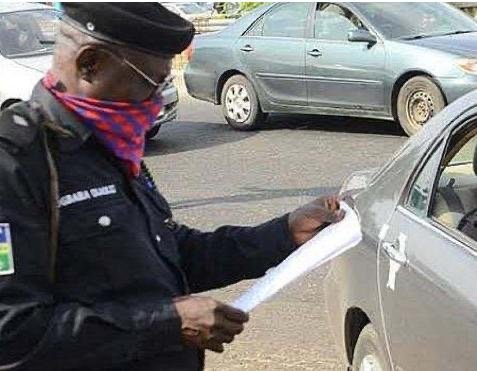
A Federal High Court sitting in Abuja has barred the Nigeria Police Force and the Federal Road Safety Corps from imposing fines on motorists over third-party motor insurance without a valid court order.
The ruling, delivered on Friday by Justice Hauwa Yilwa, followed a suit filed by an activist and human rights lawyer, Deji Adeyanju, challenging what he described as the unlawful imposition of penalties by enforcement agencies.
In the suit marked FHC/ABJ/CS/291/2025, Adeyanju dragged the Inspector-General of Police and other defendants before the court, seeking judicial clarification on whether security agencies possess the legal authority to sanction motorists over compliance with third-party insurance requirements.
Delivering judgment, Justice Yilwa drew a sharp legal distinction between enforcement and punishment, holding that while the police and FRSC retain the power to stop vehicles and verify insurance compliance, they lack the statutory authority to impose fines without recourse to the court.
“The agencies can enforce compliance but cannot arrogate to themselves the powers of a court by imposing fines,” counsel to the plaintiff, Marvin Omorogbe, told journalists after the proceedings.
The court subsequently restrained the police, the FRSC, and their officers nationwide from issuing fines to motorists over third-party insurance violations, a practice widely criticised by road users as arbitrary and exploitative.
Reacting to the judgment, Adeyanju said the ruling vindicated concerns raised by citizens over what he described as systemic abuse of power by law enforcement officials.
“The sole purpose of this suit was to establish that these agencies do not have the legal right to impose fines on Nigerians. The court has now made that clear,” he said.
However, the defendants signalled their intention to challenge the ruling. Counsel to the defence, Victor Okoye, argued that the case was improperly initiated and that the court lacked jurisdiction, noting that the originating summons procedure adopted by the plaintiff was flawed.
“We are likely to approach the Court of Appeal to determine whether this matter was competently brought before the court,” Okoye said.
Despite the pushback, the court proceeded with its decision, reinforcing that enforcement agencies must operate within defined legal limits and cannot unilaterally punish alleged offenders without judicial backing.
- Latest
- Trending