



















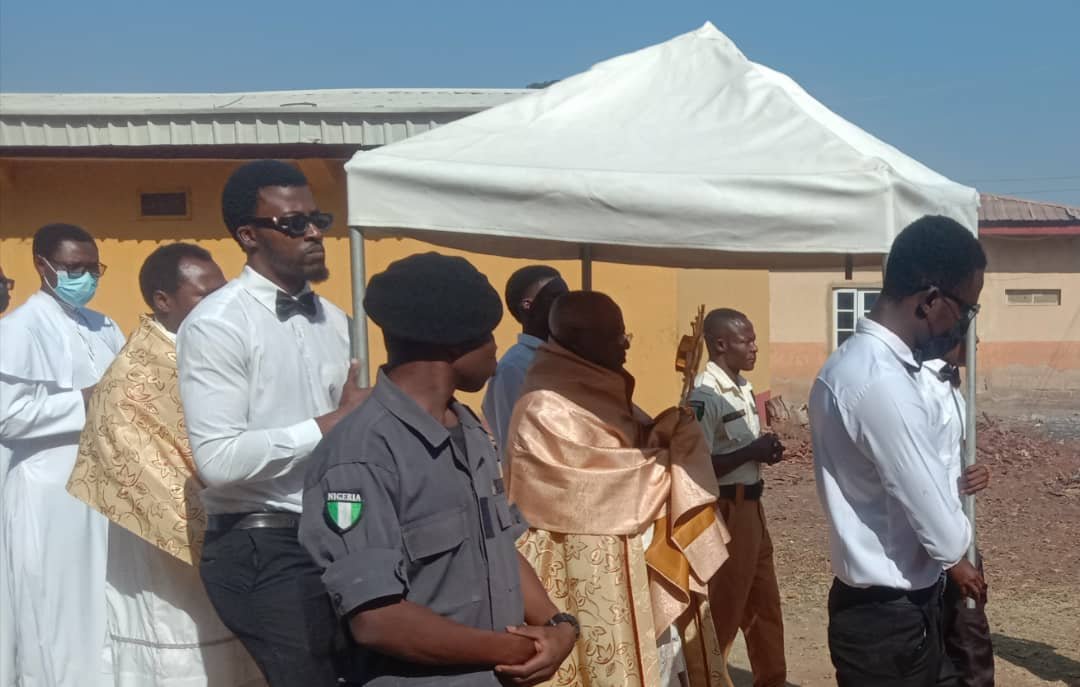
By Olivia Obijiaku
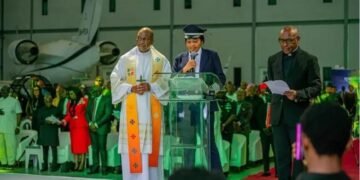
The Chief Shepherd of the Catholic Diocese of Zaria, Most Rev. Dr. Habila Tyiakonaboi Daboh has pointed to a living relationship with Jesus as the bedrock for every genuine pastoral achievement. He disclosed that, one of the most encouraging developments in his diocese has been the gradual renewal of spiritual and devotional life, conveying that he is particularly encouraged by the increasing attention paid to Eucharistic Adoration and Benediction in parishes within his jurisdiction.
“The Eucharist is the source and summit of our Christian life.” His Lordship declared. “In the Blessed Sacrament, we encounter Christ who remains with His people. As Jesus tells us, “I am with you always, to the close of the age” (Matthew 28:20). Our people need opportunities to encounter the Lord, listen to Him, entrust their difficulties to Him, and draw strength from His presence. We recognise that the foundation of every genuine pastoral achievement is a living relationship with Jesus Christ.
Our pastoral programmes, institutions and structures can only bear lasting fruits when they are rooted in prayer and sustained by God’s grace.”He explained that, the Christ they adore in the Blessed Sacrament is the same Christ, whom they encounter in their brothers and sisters, especially the poor, the sick and the vulnerable. He added that genuine Eucharistic spirituality should make them to be more compassionate, forgiving and generous, as expressed in 1 John 4:20-21, ‘our love for God must be expressed in our love for one another.’The bishop, who appreciated all chaplains, spiritual directors, presidents, executives and members of various associations, for their dedication, which is contributing significantly to the spiritual vitality of the diocese, noted that more communities are creating opportunities for the faithful to spend time before the Blessed Sacrament through Holy Hours, Eucharistic Adoration, and other forms of devotion. He implored them all, to take their Eucharistic devotion beyond the church door, acknowledging also, the enormous renewal taking place among societies, sodalities and other lay associations in the diocese.
He then charged members, to make their groups, centres of prayer, Christian formation, fellowship and service, as well as become witnesses of Christ in their families, workplaces and communities.Describing the development as important, because the Church is not sustained by priests alone, he referenced St Paul in reminding them that, “The entire People of God share in the mission of Christ. We are one body with many members, each having a particular gift and responsibility (1 Corinthians 12:4-27).” Despite renewed enthusiasm and greater participation in meetings, devotional activities, spiritual programmes and parish celebrations, as well as increasing visibility of the diocese in various provincial and national Catholic programmes and events, he encouraged societies and sodalities to remain deeply spiritual and apostolic, so as not to become merely social organisations concerned with their internal affairs. Bishop Daboh acknowledged the difficult times, characterised by economic hardship, insecurity, family problems and numerous distractions that confront his flock, and expressed that, the Church has a responsibility to lead people back to the source of their strength. On that, he encouraged the priests to continue promoting Eucharistic Adoration and Benediction in their parishes.