





















BY REV FR GERALD NWAFOR
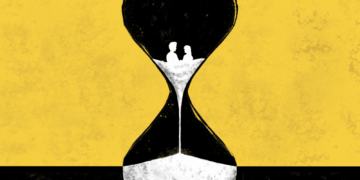
When someone dies, the family would like to know what happened, what killed the person, and if there were uncertain circumstances surrounding the death of the individual. If the person was killed by brutal force, like a gun, a knife, or clubbing, there is no need for an autopsy since the cause of death is very clear and evident, even to the deaf and the blind.
The case we are examining today is the death of a country called Nigeria. Chinua Achebe wrote a book and referred to the Nigerian state in the past, hence the title of the book is There was a country: ‘called Nigeria’. What he met growing up as a young boy and a college professor was a far cry from what he experienced in the late nineteen hundreds and early two thousand. What could have sent people to jail has built them into political heavyweights and celebrities. What could have led to being an outcast does not make one a king and a village chief.
I do not want to go into the arena of federal government, politics, and economics. Let us stick with our local environment when, as a child, all the parents in your neighborhood were your parents too. The tradition said that the son/daughter belongs to the village, and it was institutionalized in the names they give to their kids at birth: Obiora, Nworah, Adaora, Udora, and many more. If you behaved badly, any parent could call you out and go a step further to report you to your biological parents. Society looked out for you, and your parents would go to the neighbors to inform them that they were going out, and they should look out for your family.
Why are these virtues and courtesy gone from the people? The reason I did not want to connect to economics was simple. People were not very rich in the sixties, seventies, and eighties, but crime was to this current scale. The first time I saw a dead man on the street was in 1999. The Igbo people of eastern Nigeria valued the blood of human beings so much that they were afraid to kill anyone, which they referred to as (isi-ntutu, obala). Today, human beings are littered all over the place. People will walk by a dead person lying in the street as if it were an animal. The value of human life has gone down significantly.
We lock ourselves up as if to say we are afraid of the next-door neighbor, but that is not ‘As if,’ it is the truth. We have seen and heard where the next-door neighbor was the culprit, kidnapping the kids of a fellow tenant and behaving as a helper to the family while perpetrating the evil, all the while. The idea that a person you call brother can hurt you and your kids was not there 40 years ago. There is suspicion all over the place. The question is why the change from a healthy society to a dead one. The autopsy reads that we started celebrating what we should be ashamed of.
When someone shows up with wealth we know that he did not work for, we should ask questions and avoid such a person, but today we only celebrate the wealth, not the character of the person. This misjudgment has skewed our societal values toward fleshly and materialistic concerns. It’s all about money, who has the best cars, whose house is bigger, and whose dress is very costly. Nobody is asking about the sources. The collapse of the moral fiber of the country has led to the acceptance of vice as a way of life. I do not see the end very soon since the custodians of our society have joined the bandwagon.
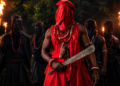
I went around during Christmas to ask questions on how chieftaincy titles are awarded to individuals in the community. Eighty percent of the people who received the title in the community paid for it. They were actually called by the king (Igwe) of the community to pay for the title. Why should a thief not pay for it, also, since he could afford it? In the early days, you need to show what you have done for the community to the extent that Bartimaeus will know when you arrived in town, since your good work and love for the people would speak for themselves. The autopsy has revealed that the custodians of our community are also the problem of the community. The kings themselves do not build anything for the village now. The kings should be called out when they make money their goal and present bad people for titleship in our towns. The exultation of fraudsters and brigandage has destroyed and killed the culture of hard work. I remember when the governor of Anambra State waged war on the traditionalists who were deceiving young people into believing that they would be rich through sacrifice. That should be condemned and frowned on immediately. Even in the book Things Fall Apart, the chief priest scolded Unoka for not working hard and did not praise him for all the sacrifices he was offering to the gods.
The autopsy has since revealed that the behavior of the elites was one of the main causes of death in the Nigerian state. The rich, according to the tradition of our people, should be respected, not feared, but they should not presume the respect because the respect should be earned and merited. The rich should not abuse the respect by bullying the people. The children should learn how to use their hands to build a lasting society. They should not wait for everything to be dumped on a platter of gold. The man with a swimming pool in his house should not look down on the man who swims in the stream since they gain the same strength. The man who has four slaves to serve him should not abuse the people who serve themselves and enjoy their meal. The man who watches television and social media should appreciate the person who watches real-life events in the village, since they (villagers) are the real human beings. The impression that one person is inferior and another superior should be abandoned. The feeling that you are living in a mansion and in luxury should be exposed because those people are actually living in prison without adequate freedom. The autopsy has also revealed that we can do a transplant of mindset and kindness, rebuild society again, and we can have our country back. Remember to have your PVC ready for 2027 because it is part of the societal re-engineering and civil responsibility.