























By Olivia Obijiaku
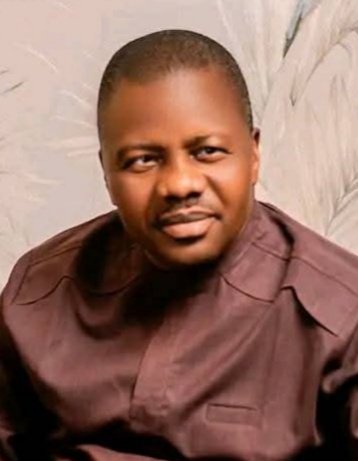
Recalling how Kaduna Ecclesiastical Province, attracted diverse people of Nigeria, but currently struggles with insecurity and other challenges, Evang Joseph Nashakyya (KSM), lamented the fading glory of the province, describing the situation as frustrating. He disclosed this through his paper titled, “Transforming Minds for Peaceful Co-Existence: Empowering Catholic Laity in The Kaduna Ecclesiastical Province for Ethical Citizenship, Social Healing, and The Common Good in An Era of Heightened Politics and Beyond.’
“All roads and rail lines used to lead to the province for its many institutions of learning, primary through secondary to tertiary. It used to be a flourishing territory with functional companies like Arewa Textile, UNTL, and Peugeot Automobile, Leventis, PZ among others providing employment opportunities to employable youths. The territory flourished but not without pockets of insecurities traceable to religious differences like the year 2000 Kaduna crisis. The province has known the cross – we are suffering so much. But we are Pilgrims of Hope, we will NEVER conform to despair.”
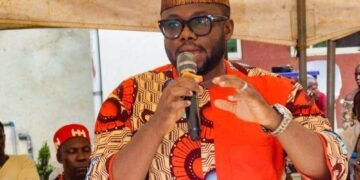
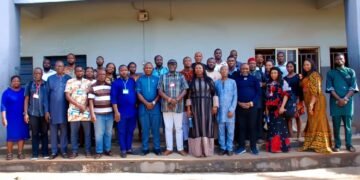
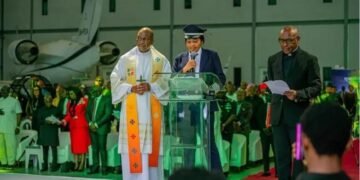
Evang Nashakyaa, was a speaker at the 2026 Provincial Conference of the Laity of Kaduna Ecclesiastical Province in Zaria, with the theme: “Pilgrims of Hope: Empowering the Catholic Laity for Spiritual Renewal, Social Transformation and Responsible Citizenship in this Political Era.” He reminisced through the paper, how, partly, due to its huge agricultural land mass that produces crops such as cotton, groundnuts and ginger for local consumption, local manufacture and for export, the territory used to boast of performing industries/firms among others that became a cynosure for the immigration of large numbers of people across the country to the province.
Amidst the setbacks, the knight charged lay faithful to work towards ameliorating the situation for the good of all. He reminded them of their privileged position as pilgrims of hope, the kind of hope that makes one to yearn for sunnier weather, or a smoother path ahead, stressing the need to resolve to make the future better. Likening the situation in and around Kaduna Ecclesiastical Province, to Hebrews in wandering, pilgrim community from Egyptian slavery through the wilderness to the Promised Land, he implored them to shun the temptation to give up, but to hold on to God’s plans to give them a future and a hope.
“This is the hope that is defiantly hopeful.” The presenter assured. “What actually leads to hopelessness is not suffering, but the suffering that we think we cannot control. Five percent of lay Catholics alone may believe and practice this hope, but that number can change the narrative. The four lepers of Samaria did not just wish that that food will come to them, they took steps and risk of entering Syria (2 Kings 7: 3-9). St. Paul was warned by the Holy Spirit that prisons and troubles awaited him, but he took the risk, reckoning his life to worth nothing compared to the purpose of completing his work that Jesus gave him (Act. 20: 23 – 24). This is the hope that Pilgrims of Hope should take ownership of.”
Evang Nashakyaa maintained that pilgrims of hope do not conform to business-as-usual politics, proffering that, with renewed minds and brave hearts, Catholic laity can build a province and a nation where everyone can live in dignity and peace, making democracy work for the poor. “There is a reward for it from the Lord Jesus Christ whose promises are cashable in the Bank of Heaven where supplies of all our needs flow from.” He conditioned.