



















By Olivia Obijiaku
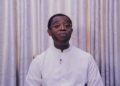
Though the Holy Week begins on Palm Sunday, many Catholic faithful and Christians do not know why Monday, Tuesday and Wednesday are part of the Week of Sorrows, since there are no special ceremonies performed on the aforementioned days, when compared with the other days of the Week, the Triduum: Holy Thursday, Good Friday and Holy Saturday. Helpfully, the Bishop of the Catholic Diocese of Zaria, Most Rev. Dr. Habila Tyiakonaboi Daboh intervenes in the ignorance.
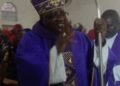
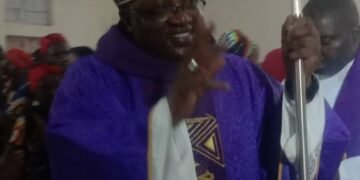
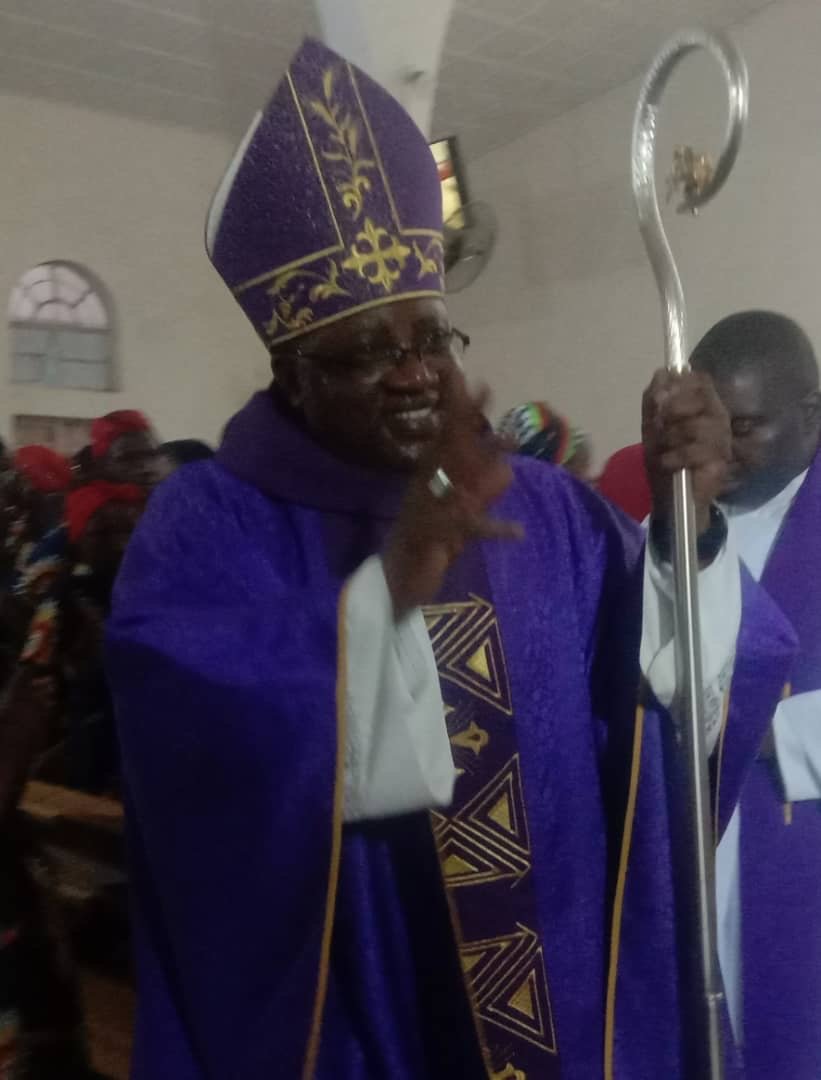
Casting light on the inclusion of the three days in the Holy Week, during the Cathedraticum for Samaru Deanery of his diocese, which held in St Mary’s Catholic Church, Monday, March 30, 2026, the Local Ordinary, catechized that, the Mondays of the Holy Week in Cycles B and C of the Church’s calendar focus on the cleansing of the Temple, while that of Cycle A, the current cycle, focuses on the cleansing and anointing of the feet of Jesus by Mary, all of which point to the need to identify with Jesus all the way to Calvary and His Resurrection. .
“It is a special day in the life of the Church.” The bishop explains. “Being Monday, people will ask ‘What is holy about Monday, Tuesday and Wednesday? We know Thursday, being the day for His Last Supper, the first Mass. We know Friday, being Good Friday, the day Jesus died. We know Saturday, being the day that Jesus was in the tomb. We know Sunday. And so, when we say we have Holy Week, what has the Holy Week got to do with Monday, Tuesday and Wednesday?
“Of course, we know that, in the Church’s calendar, we have Cycles A, B and C. This year, being Cycle A, we are reading about Mary, Martha and Jesus, with their brother, Lazarus. But in other cycles, we see that what makes the Monday holy is the cleansing of the Temple. But today, it is about the anointing of the feet of Jesus by Mary. This anointing is simply to make us understand the need for us to also clean our hearts, so that we make them ready to journey with Jesus to Calvary.”
“This is Holy Week. It is an opportunity for us to appreciate God for keeping us alive till this moment. This is time for us to purify ourselves and remain holy. This is time for confessions. This is time to renew our relationship with God, not only with God, but with one another. When we do that to our brothers and sisters, then, we do it to God, so that we journey together with Jesus to Calvary, die with Him on Good Friday, and resurrect with Him on Easter Sunday.
In his homily of Palm Sunday, at Christ the King Catholic Cathedral (CKCC), Sabon Gari, Zaria, March 29, 2026, His Lordship taught that, Palm Sunday begins the Holy Week, the most sacred week of the Catholic faith. He detailed that the readings of the day lead the faithful into one great mystery of suffering that leads to glory, of humiliation that gives birth to exaltation, and of death that opens the door to new life.
On the liturgy of Palm Sunday, he said, “There is no suffering we endure that Christ Himself has not endured. And yet, my brothers and sisters, this is not the end of the story. His victory would not come through violence, but through love. His throne would not be a palace, but a cross. And His crown would not be of gold, but of thorns.”
“For us, living in times of insecurity and hardship, the message of this day is both consoling and demanding. It consoles us because it assures us that suffering is not meaningless. When united with Christ, our pain becomes a participation in the suffering of Christ. Our tears are not wasted. Our struggles are not in vain. God sees, God knows, and God walks with us. We are never left alone.”
Full of appreciation for the surprise of the day, Bishop Daboh thanked members of the deanery, led by the Dean, Very Rev. Fr. Patrick Andrew Atama, for defiling the odds of increasing hardship and reduced number of parishes, occasioned by the addition of some parishes in the Old Samar Deanery to the newly created Bassawa Deanery, months ago, to still support him generously. Though he paced their solidarity and relationship over the gifts, the recipient prayed God to reward them abundantly, disclosing that he would channel every kobo realized from the year’s cathedraticum to the development and growth of the diocese.