





















By Olivia Obijiaku
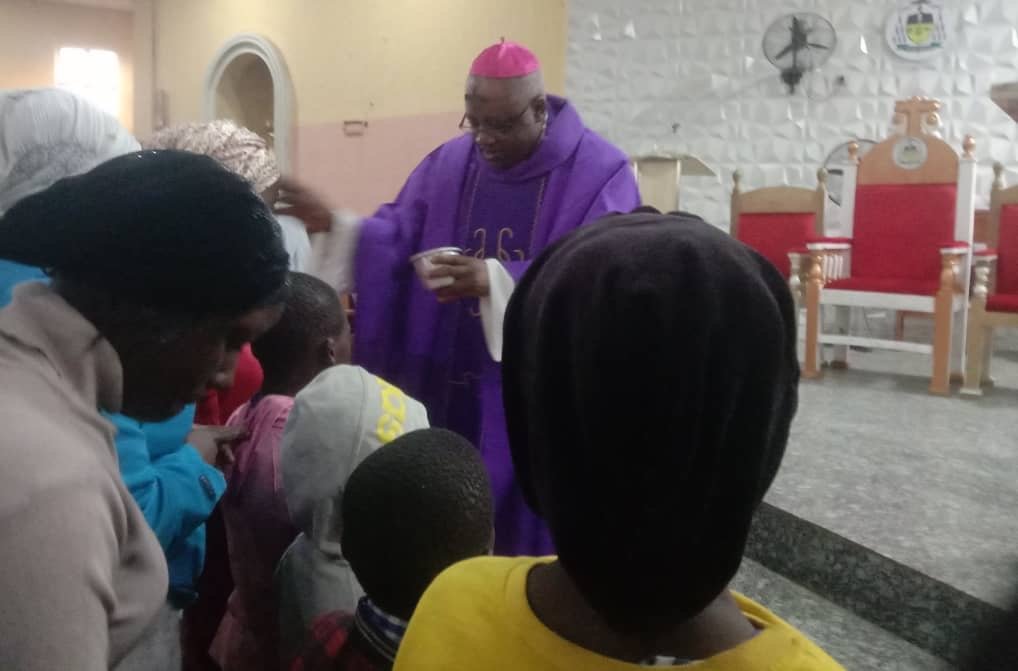
The Season of Lent has been defined as an opportunity to amend one’s ways and renew their relationship with God, their Maker. Catechizing the faithful during the Mass he celebrated in Christ the King Catholic Cathedral (CKCC), Sabo Gari on Ash Wednesday, February 18, 2026, the Local Ordinary of the Catholic diocese of Zaria, Most Rev Dr. Habila Tyiakonaboi Daboh urged them to repent of their sins and return to God, so that He may renew them.
The bishop who pointed them to the three pillars of Lent: prayer, fasting and almsgiving intimated that the three are an essential part of Christianity, even as he admonished them to observe each one of them in the right disposition, without making public show of their observances.
“My brothers and sisters, let us change in this season of Lent.” The Chief Shepherd beckoned. “Let us seek the face of God. Let us come back to God. Let us repent. We know our sins. Let us be sorry for our sins. Let us confess them and then God will renew us. Lent is an opportunity for us to renew our relationship with God.”
“If you are serious with your Christianity, you must live a life of prayer; except if you are sick, you must be a man or a woman of prayer. If you are a serious Christian, you must be someone who gives to the poor. And so, the Church places before us, the three pillars, namely: prayer, fasting and almsgiving. These three are the ordinary part of every Christian. They are not optional devotion.”
“Prayer connects us to God. Almsgiving makes us to be conscious of those who are living in lack. We know those who are poor. But God is telling us not to do anything in order to attract people. Do it from your heart. That is why Jesus says that the Father, who sees in secret sees our intention. God rewards. He gives grace. He transforms us and gives us eternal life.”
Bishop Daboh echoed St John Paul II’s assertion that nobody is rich as not to be in need of anything, neither is anyone so poor to give anything. He explained that assistance is not limited to financial and other material resources, imploring recipients of other people’s benevolence to help others, including giving their time for the sake of other people.