





















By Charles Igwe
If the first missionaries arrived bearing the Gospel upon the river, the generations that followed learned to carry that same Gospel upon their shoulders, in their hands, and within the very fabrics of their communal life. The small schoolroom of 1885—where redeemed children learned to read, pray, and make with their hands—grew over the decades into a civilisation marked by faith. By the time the 20th century drew to a close, the Church in Onitsha was no longer simply a mission; it had become a people, a culture, and a spiritual homeland. And like every living organism, it kept evolving, taking on new forms as God raised new shepherds to guide its unfolding story.
When Cardinal Francis Arinze concluded his tenure as Archbishop of Onitsha in 1985, he left behind a Church grounded in deep catechesis, liturgical clarity, and a renewed sense of identity. Formed by the same missionary tradition that had defined the earliest Spiritans, he recognized that the Gospel takes root most firmly when it is taught with precision and lived with joy. His leadership strengthened Catholic schools, expanded the apostolate of families and laity, and prepared the Archdiocese for the modern era. It was Francis Cardinal Arinze who, long before “globalization” became a common word, already embodied a faith that could speak fluently to the universal Church while remaining rooted in the soil of Igboland. In his years, one sees the theological truth that the Church grows not by abandoning its beginnings, but by deepening them.
Archbishop Albert Kanene Obiefuna, who succeeded him, inherited a Church that was strong in faith but still thirsty for wider pastoral presence. His leadership was marked by quiet firmness, a pastoral heart, and a gentle insistence on formation—both human and spiritual. Under his watch, St. Charles Borromeo Hospital regained strength, seminaries remained full, and parishes blossomed in number and vitality. Where Francis Cardinal Arinze had fortified identity, Archbishop Obiefuna broadened reach. And both men, in different ways, helped prepare the Church for what history would later interpret as a providential transition.
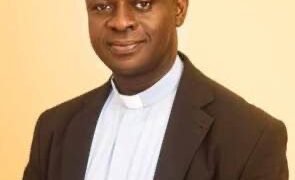
When Archbishop Valerian Maduka Okeke assumed pastoral governance in 2001 and was installed in 2003, the Archdiocese entered what many describe as a season of purposeful maturity; a time in which the energies, sacrifices, and intuitions of the past found new expression for a new century. His leadership did not feel like a departure from what came before, nor a conscious re-enactment of earlier eras; it felt instead like the quiet flowering of seeds planted long ago, a moment in which the Church’s historical memory and contemporary realities met in a single pastoral vision.
From the beginning of his episcopacy, it became clear that Archbishop Okeke saw mission not as nostalgia for earlier triumphs but as a living responsibility. His approach to pastoral governance carried a theological conviction that the Gospel, once welcomed on the banks of the Niger, must continually take on new forms if it is to remain a force for transformation. Under his guidance, the Archdiocese moved with unexpected speed from structures designed for an earlier generation into the demands of an age defined by technology, migration, education, and the spiritual restlessness of young people searching for meaning.
In two decades, roughly 145 new parishes have emerged—some within the expanding horizons of Onitsha metropolis, others in rural communities that once felt too small or too distant to be considered pastoral priorities. This expansion revealed a Church that understands the Gospel as something that must be embodied in daily life—schools, chapels, skill centres, and clinics rising wherever faith takes root.
The establishment of Blessed Iwene Tansi Major Seminary in 2009 gave form to the extraordinary rise in priestly vocations—an unmistakable sign that the Church in Onitsha had moved from receiving missionaries to sending them. Today, priests formed within the Archdiocese serve not only across Nigeria but in Europe, the Americas, and Asia, carrying to distant lands the same missionary zeal that once journeyed up the River Niger.
Education and healthcare—long-standing pillars of Catholic life in Igboland—received renewed vigour under Archbishop Okeke’s stewardship. Mission schools were revitalized and equipped to meet global standards of learning.
Perhaps the most symbolic fruit of this new era is Shanahan University. Rising in Onitsha in 2025, it represents not an imitation of past educational efforts but the maturation of a long-standing dream: a university where faith and intellect meet, where research and formation walk hand in hand, and where the Church prepares a new generation to think, innovate, lead, and serve. In a beautiful theological sense, it echoes the mystery of mission itself—what began as simple catechism lessons by the riverside has become an intellectual tradition capable of shaping tomorrow’s world.
Today, the Archdiocese stands as a powerful fortress, constantly reminding us all that what the early Spiritans carried into Onitsha was not merely a religious system but a living seed. That seed took root in a people who, through time, sacrifice, creativity, and grace, have allowed it to blossom far beyond what those first missionaries could ever have imagined.
As we celebrate 140 years since the river bore the Gospel to our shores, we stand at a sacred threshold. The past offers its wisdom; the future asks for courage. The Church that once entered this land by water must now enter a new age through formation, digital evangelization, academic excellence, global mission and a renewed commitment to community and communion.
What began as a mission has become a people.
What now stands as a people must become a movement.
And if history teaches anything, it is this:
the same grace that carried a small boat against the currents of the Niger still carries the Church today—steadily, tenderly, and toward horizons yet unseen.